May 272014
 

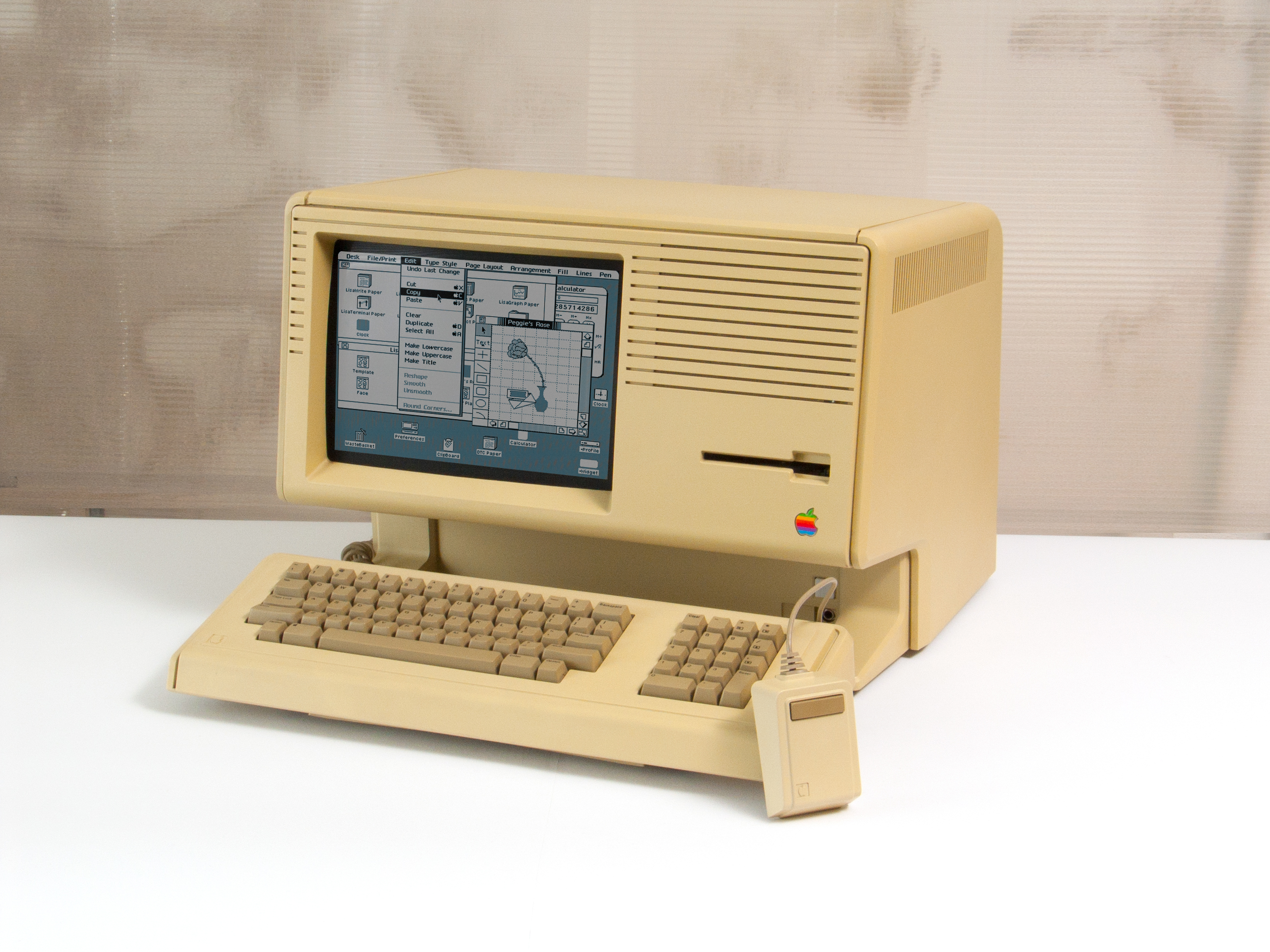
Apple-LISA-Macintosh-XL

image courtesy Wikipedia

Even though I have been using Macs for most of the three decades they have been around, I’ve never had a chance to use an Apple Lisa, the famous predecessor to the Macintosh that cost a cool $10K back in 1983 (or nearly $24K in today’s inflated dollars).

And while I’ve always wanted to add one to my collection of classic Apple computers, I’ve never had an affordable opportunity to purchase a working model. Thankfully modern technology allows us an opportunity travel back in time and experience using an Apple Lisa via a brilliant emulator written by Ray Arechelian. Thom Holwerda wrote about it on OSNews today and stirred up lots of new interest for LisaEm that appears to have been dormant since 2008. Be sure to check out the comments to see remarks from Ray who has apparently been coaxed into resurrecting the project with several offers of assistance.

Explore Ray’s site for the full story about his efforts to develop a software version of Lisa. If you are blessed to have a real Lisa and need help with troubleshooting it the Lisa FAQ is extensive. His Lisa Sites section includes a vast number of links to other Lisa-related sites and resources. I’ll be checking them out myself after I finish the steps to install LisaEm and find out what it was like to experience the Apple Lisa back in 1983.

 

Share
Apr 212010
 

6.0.8 system startup window

I took a few moments to launch Mini vMac and play with Mac OS 6.08 on my MacBook Pro that runs Snow Leopard. Since Snow Leopard will not let you write to or create HFS disk images I was limited to what was available on the 6.08 Disk Tools disk, namely the venerable Disk First Aid and Apple HD SC Setup.

I was very proud of myself for remembering that there is a secret key combination to expose the logging window of DFA so you can see what it is doing. Back in the early days DFA just worked it’s magic and expected you to wait patiently for the watch cursor to disappear and the application to report it’s cryptic results.

If you press Command-S while DFA is open a window underneath appears that displays the status of the DFA processes. Since this always begins  and ends with a date/time stamp and the message “Scavenging begun” or “Scavenging ended” I presume Command-S was chosen to display the Scavenging process.

Disk First Aid 1.4.3

Disk First Aid 1.4.3 with secret window revealed

Later versions of Disk First Aid by default display the disk examination and repair process, but back in the System 6 days you had to know the magical keycode to watch its inner workings as it churned away performing its diagnostics and repair.

Share
Apr 142010
 

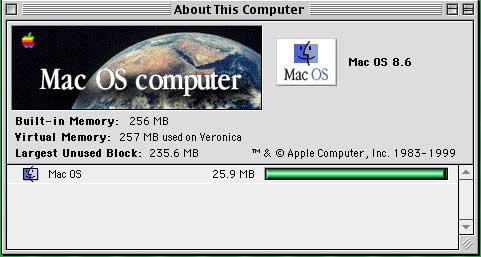
I completed my project to install 3 different versions of the Mac OS onto my recently acquired PowerBook G3 “Lombard.” Below are the resulting screenshots of the computer started into Mac OS 8.6, Mac OS 9.2.2, and Mac OS 10.3.9 “Panther.”

About this Mac - OS 8.6

"About this Computer" window under Mac OS 8.6

Startup Disk control panel - Mac OS 8.6

Startup Disk control panel from Mac OS 8.6

Continue reading »

Share
Apr 122010
 

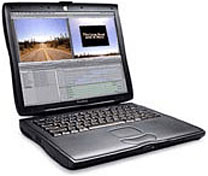
Lombard

Last week I posted an article about acquiring a 333 MHz PowerBook G3 “Lombard” to add to my collection of classic Apple computers. During my research about this computer I discovered that it has the ability to operate under three different major versions of the Macintosh operating system: 8, 9, and X.

Thus was born my idea to configure the Lombard with the ability to boot into each of these operating systems so that it might be a self-contained demo of the evolution of the Mac OS from 8.6 (May, 1999) through 9.22 (December, 2001) all the way to 10.3.9 (April, 2005).
Continue reading »

Share
Dec 052008


If you aren’t sure which versions of the Mac OS are compatible with your Macintosh, here are some excellent resources to find out:

AppleCare’s Knowledge Base includes several relevant articles on the topic:

My favorite tool for finding a quick answer to this question is Ian Page’s awesome MacTracker, a comprehensive collection of vital information about every model of Macintosh that is available as a free Mac OS X or Windows application, or via a web site that’s optimized for viewing on an iPhone or iPod Touch.

Now, as for which version of the Mac OS is optimal for your model of Macintosh, well, that’s beyond the scope of this article. The folks over at lowendmac.com have a number of helpful articles on this topic, though.

Share